Work
I don't have fancy client logos or case studies… yet. What I do have is my approach to thinking about business problems. Here it is, applied to my past work.
I'm handed metrics and work to find the real lever in the system.
UpContent was a technically excellent search tool with an early, fatal flaw: it required users trained on years of Google searches to understand Boolean logic before they could get value. Strong signups met a brutal churn rate.
Our churn wasn't a product or marketing problem — it was an onboarding and activation problem. It took too much time and effort for users to arrive at the "aha moment." The first instinct was to improve our support and help docs. That was being reactive. The users didn't understand the core mechanic and had difficulty trusting results they couldn't understand.
- Created an onboarding flow that introduced Boolean search, demonstrated the tech, and gated the first experience — engineering the "aha" instead of hoping for it.
- Added a visible process to a confusing function. Instead of a progress bar, phrases like "surfacing content," "ranking articles," and "eliminating spam" helped establish trust. Users distrust results that arrive too fast or that they don't understand. The Labor Illusion (reference, opens in new tab)
- Built escalation logic into support. Self-serve first, fast human handoff second. Most users want to solve it themselves — until the moment they don't, and then they want a human ASAP. An automated support tool handled that.
- Wrote the best Boolean explainer on the internet. I admittedly wanted to copy somebody else's, but it didn't exist. I used ("Pizza") AND ("Pepperoni" OR "Mushrooms" OR "Pineapple") ("Pizza") AND ("Pepperoni" OR "Mushrooms") NOT ("Pineapple") Same craving, two different orders — that's AND / OR / NOT. as the example.
Reduced churn. Reduced support load. The system started teaching users instead of relying on them to already know.
A global network of volunteer-run startup events. I was asked to improve ticket sales and organizer satisfaction. The organizers were unpaid, under-supported, and carrying 100+ hours of work on duct-taped tools.
The metrics I was responsible for — ticket sales, event growth — were treating symptoms. The real leverage point was the organizer's experience. Burnt-out organizers run worse events and don't return. We wouldn't be successful pushing organizers harder, but by fixing the friction they experienced. The answer to "sell more tickets" was to support the organizers better.
- Redesigned the application process with branching logic and automated scoring — and reverse-engineered the traits of successful past events to build the criteria.
- Rebuilt the help docs content and structure so answers were findable at the moment of need, cutting the cognitive load for organizers. Cognitive Load (reference, opens in new tab)
- Shifted from 1-to-1 mentorship to all-to-all knowledge sharing by interviewing top organizers and codifying their playbooks.
- Built activity-triggered onboarding emails keyed to real organizer milestones (venue secured, tickets live) instead of a generic time-based drip. Contextual relevance and timing beats volume.
Improved organizer NPS and everything downstream of it, from attendee NPS to repeat organizers. System Leverage Points (reference, opens in new tab)
I managed email marketing as the primary channel for a university fundraising operation. A 120K+ list, with engagement quietly declining across key touchpoints. A fixed audience that couldn't be grown, only kept.
Our communications were almost entirely "ask"-driven — donate, attend, volunteer, submit. Every email made a withdrawal from a finite account of attention and goodwill. Nobody's unmet need is "I have money and nowhere to give it." So the open-rate question every recipient was silently asking — "what's in it for me?" — had no good answer.
- Inverted the "ask" to "give" ratio in our messaging. School pride via sports, research wins, alumni stories — the things that made people feel good about the institution before any request. Reciprocity (reference, opens in new tab)
- Rebuilt the email templates for scannability and modernity — headers, subheads, accessible structure — because a stale, recycled design gets pattern-matched to "ignorable" before it's read.
Steady engagement recovery across touchpoints, and record fundraising years. Long-game brand-feeding over short-term extraction.
Some vibe-coded projects I've had fun building. I've learned a lot about design, product, and marketing along the way — and I'm happy to apply those skills to your challenge.
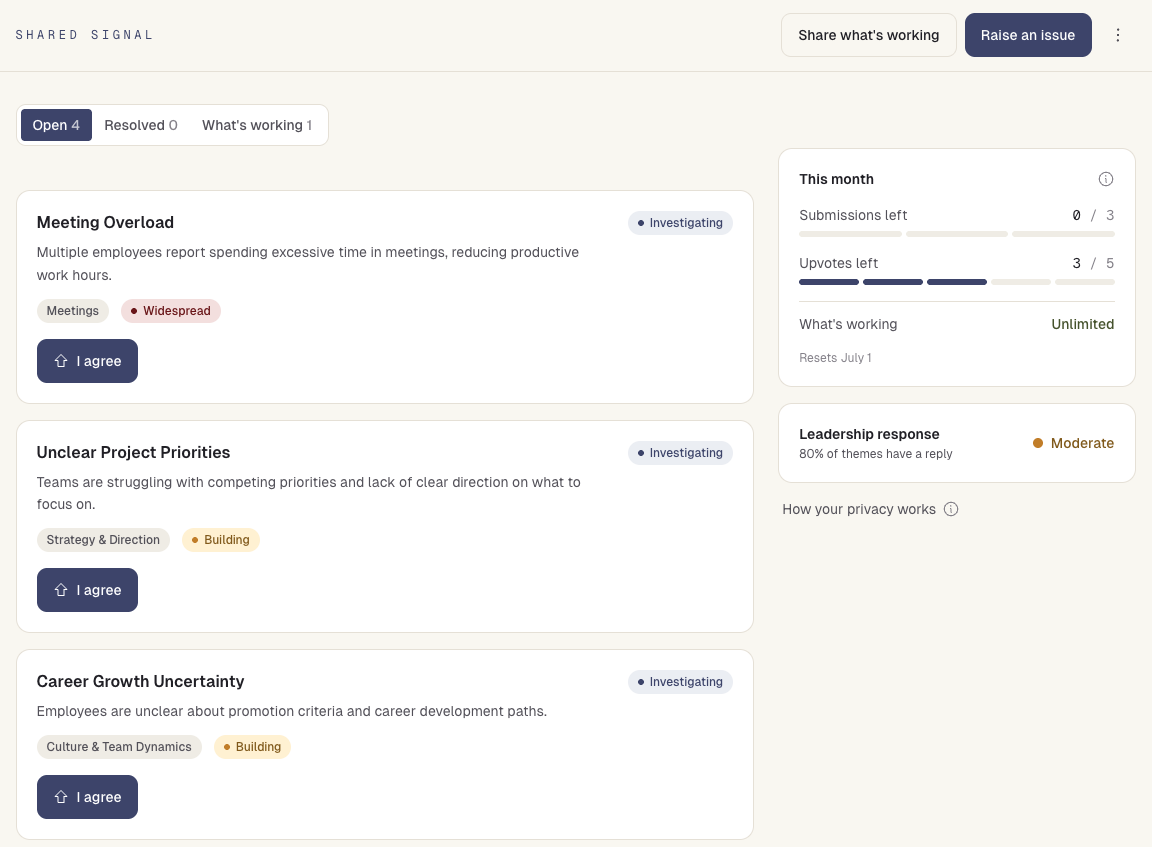
Pluralistic ignorance is the quiet killer of good organizations: everyone privately doubts the plan, assumes they're the only one, and stays silent. The bad decision survives because people are afraid to name it.
Shared Signal surfaces what a team actually believes by collecting positions privately and revealing them only once a threshold agrees. The risk of speaking up first disappears, and the real consensus becomes visible.
I built it because this is the failure mode I keep finding underneath broken marketing — not a skills gap, but a room full of people defending a decision none of them believe in. The product is one answer to that problem.
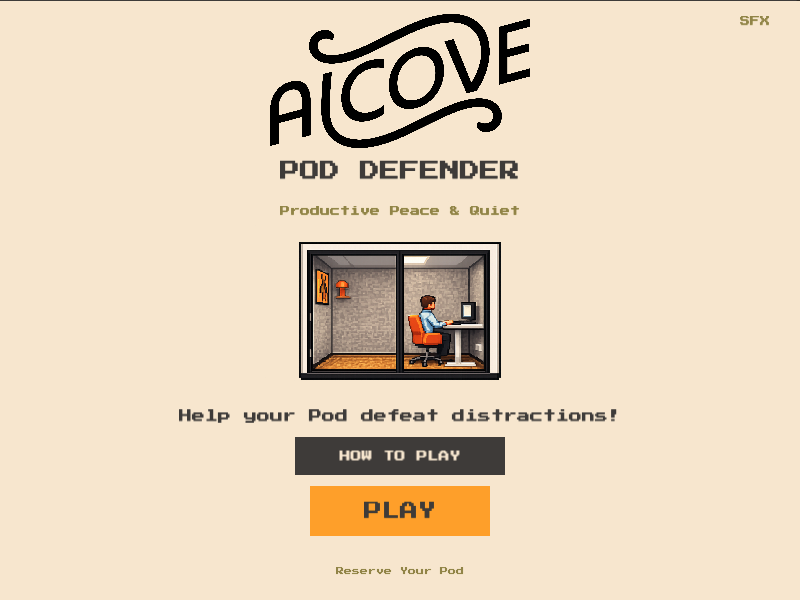
ALCOVE makes the “Pod” — a private office space — and their promise is “productive peace and quiet.” During a brand relaunch, the obvious move was more ads. I made a browser game instead.
The game lets you experience the product's value in a fun way rather than reading a list of bullet points. It doubled as a low-cost channel experiment to see what earned attention without buying it.
This was the kind of unconventional, on-brand swing I'd rather take than another forgettable campaign.
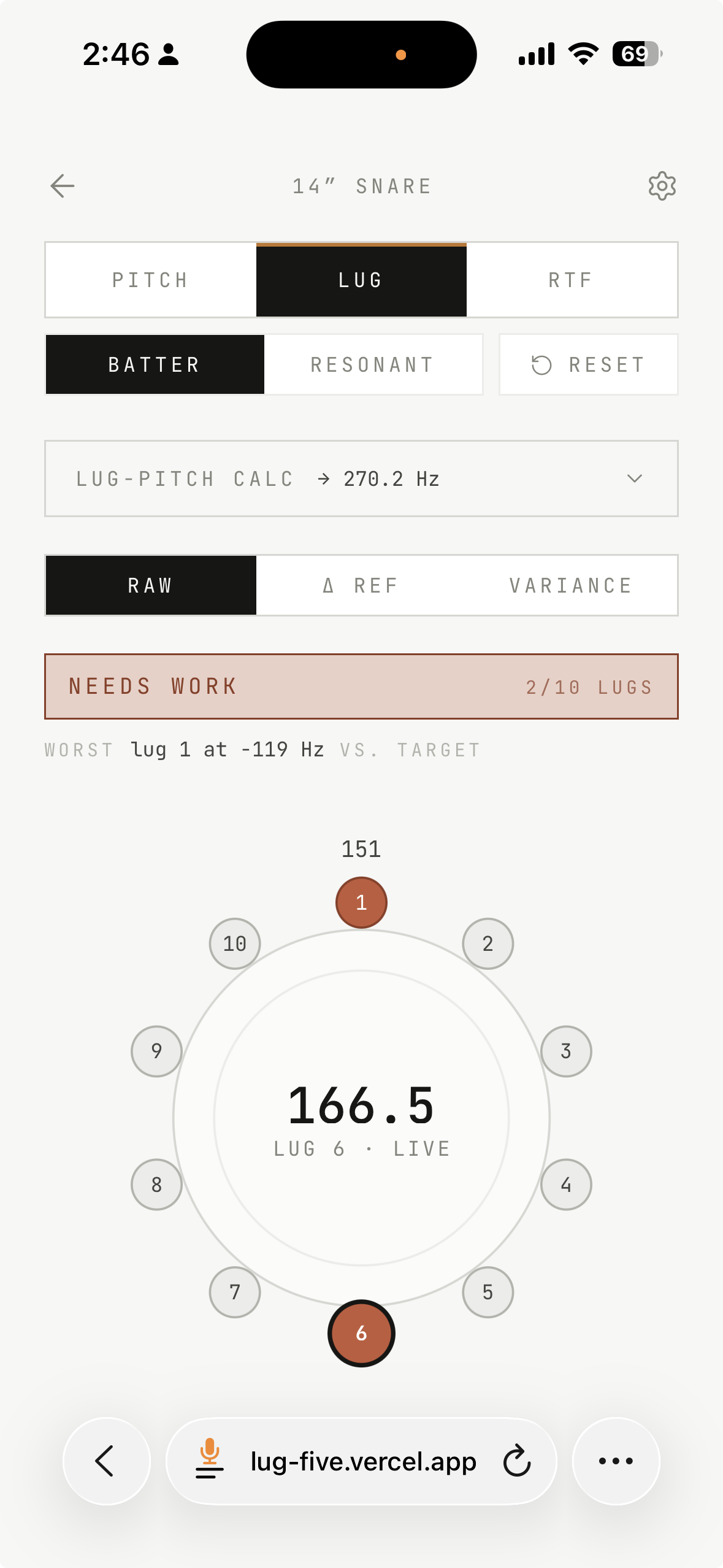
Tuning a drum kit is famously vague and frustrating work. The existing solutions are expensive physical tools or paid apps — a gatekept problem with a captive audience.
Lug does it in the browser, for free. No download, no purchase, no account.
I'm a drummer, so this scratched a personal itch and gave me a chance to experiment with design and give back to the community.
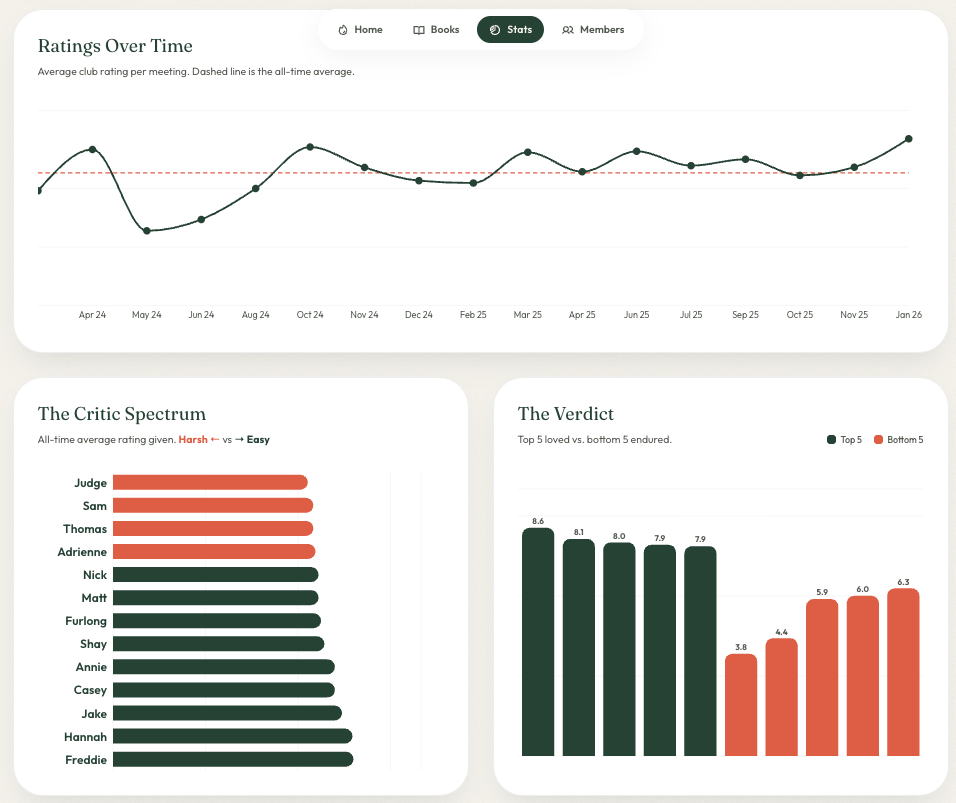
My friend group keeps a book club and a detailed spreadsheet along with it. It holds answers to the questions we get often: favorites, worst books, who's the harshest critic, who's the best host.
Boulder Gets Lit turns the same data into something you can actually feel: patterns, recommendations, and the personality of a group of readers, visible at a glance.